About the House of Caldwell
Three Generations of American Workwear, Reimagined
Originally published: Autumn 1947 | Last updated: Spring 2026
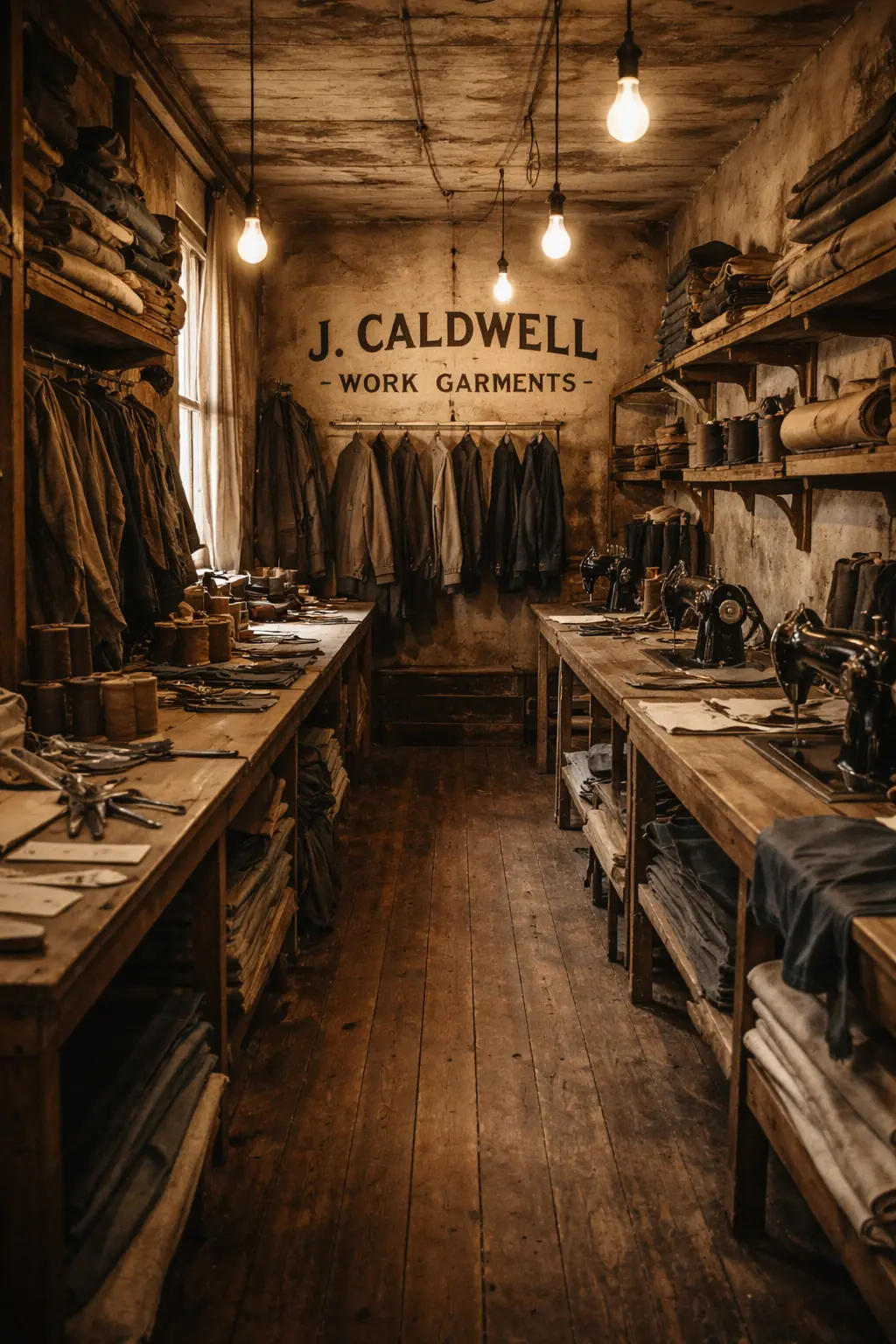
The Workshop
James Caldwell Sr. never intended to start a clothing company. A machinist by trade, he spent twelve years on the assembly line at Ford's River Rouge Complex — the largest integrated factory in the world. But it was the clothes he wore, not the cars he built, that would define his legacy.
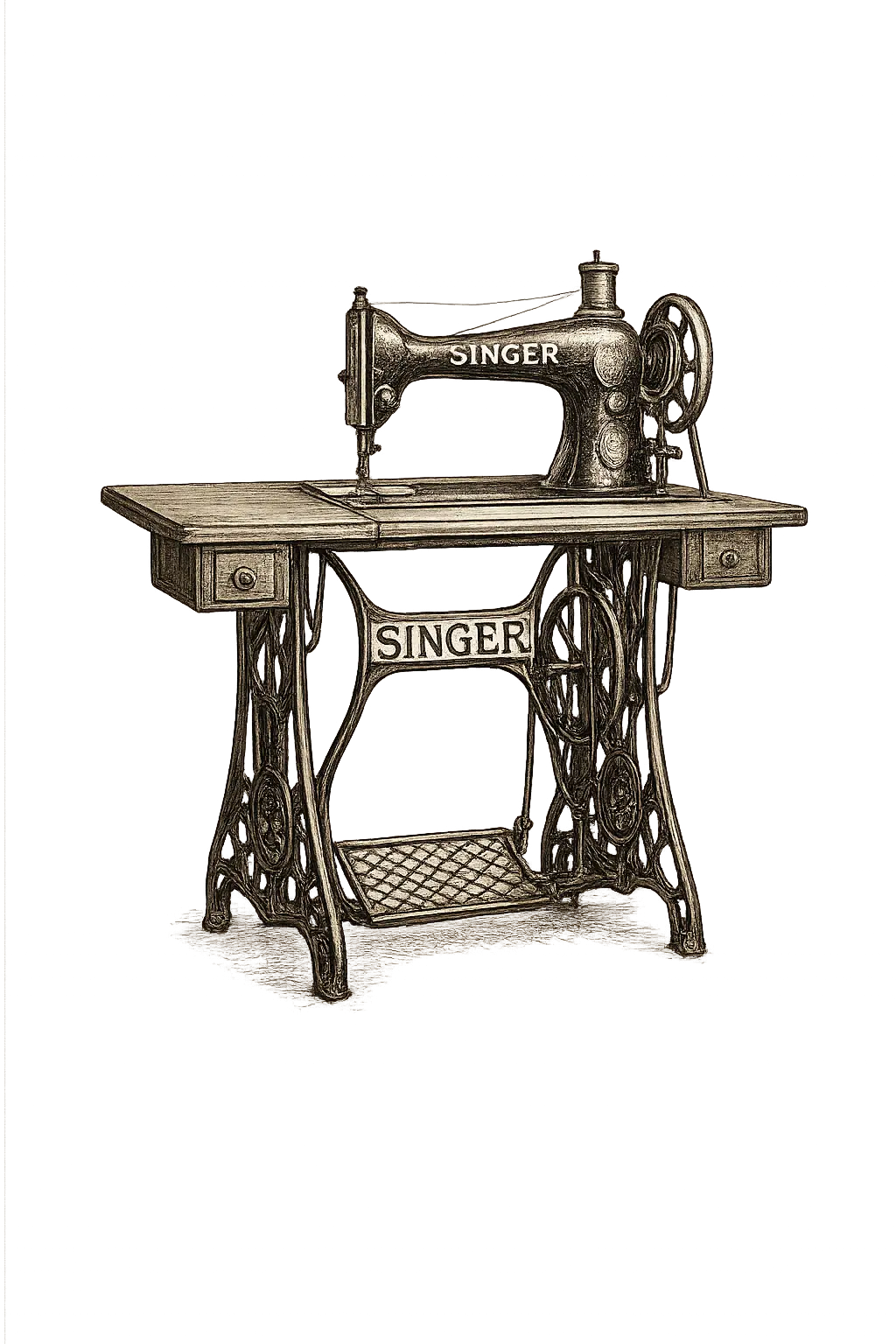
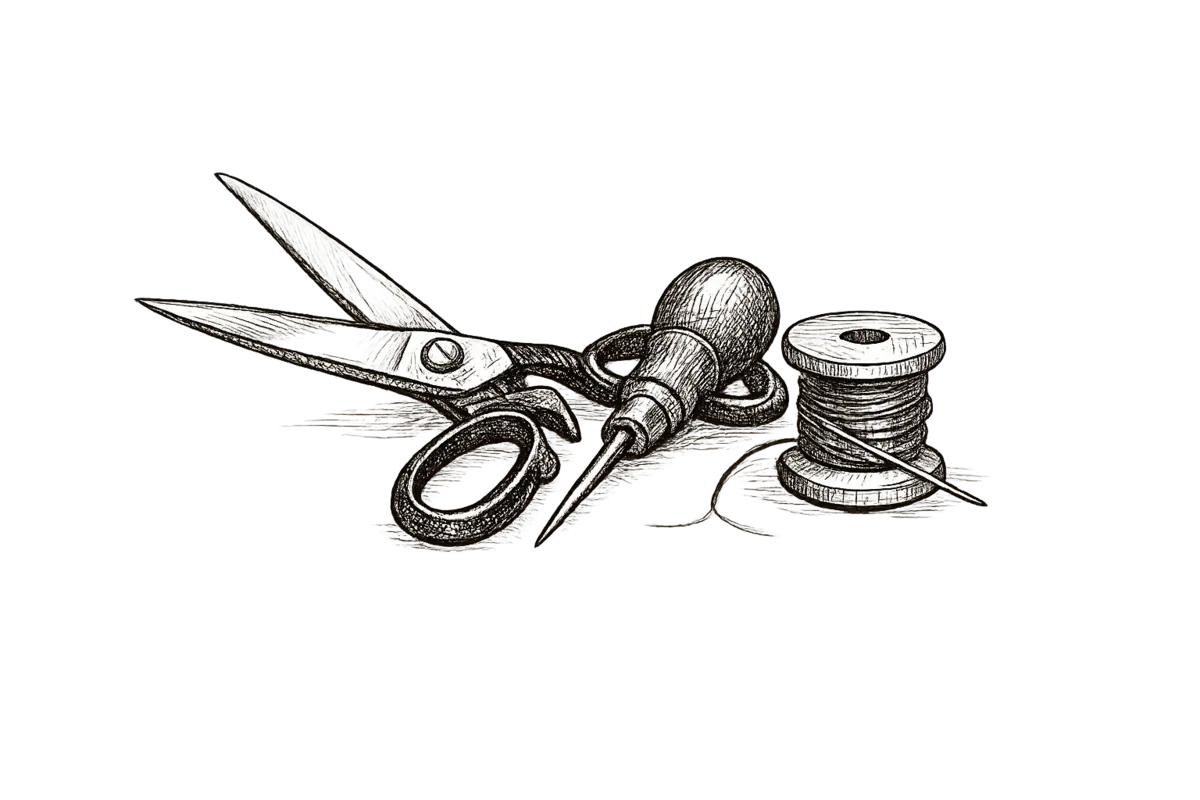
By the winter of 1946, Caldwell had grown frustrated with the standard-issue work garments that split at the seams after a few months of hard labor. Armed with a surplus Singer sewing machine and rolls of surplus military canvas, he began making his own jackets in the evenings — cutting patterns on the kitchen table of his Corktown apartment.
Word spread quickly among the Rouge workers. By spring 1947, demand had outgrown the kitchen. Caldwell signed a lease on a narrow storefront at 4217 Michigan Avenue and hung a hand-lettered sign: "J. Caldwell — Work Garments Made to Last." The "& Sons" would come later — when James Jr. and Thomas joined the bench in the late 1950s.
The workshop's early output was modest: canvas jackets, denim trousers, and heavy cotton shirts. But every piece carried a quiet distinction — triple-stitched seams, bar-tacked stress points, and a fit that improved with wear rather than deteriorated.
The Caldwell Doctrine
"We don't follow trends. Trends follow the men who show up to work every morning."
This philosophy, scrawled in James Sr.'s own hand on the workshop wall, remains the brand's unofficial motto. In an industry obsessed with seasonal novelty, Caldwell & Sons has always operated on a different clock — one measured not in fashion cycles but in the lifespan of a garment.
Every design decision is filtered through a single question: will this still be worth wearing in ten years? The answer determines the weight of the fabric, the gauge of the thread, and whether a zipper or button closure will better withstand a decade of daily use.
A Chronicle of Craft
Workshop opens at 4217 Michigan Avenue, Detroit. James Caldwell Sr. begins producing canvas work jackets for Ford factory workers.
The first "Ironside" work jacket is introduced — a waxed canvas shell with brass hardware that becomes the brand's signature piece.
James Caldwell Jr. joins the business after apprenticing under his father. The sign changes to "J. Caldwell & Sons."
Expansion into leather goods and boots. A partnership with Horween Leather Company begins — a relationship that continues today.
Third generation: Robert Caldwell takes the helm. He modernizes production while preserving hand-finishing on all mainline pieces.
"Heritage Collection" launches — vintage patterns from the 1950s archive reissued with modern Japanese and American fabrics.
Flagship store opens in Detroit's Corktown neighborhood — a restored 1920s brick warehouse two blocks from the original workshop site.
Spring Collection "Assembly Line" drops worldwide. The brand's first global release, featuring collaborations with textile artisans from Japan and Italy.
Materials & Method
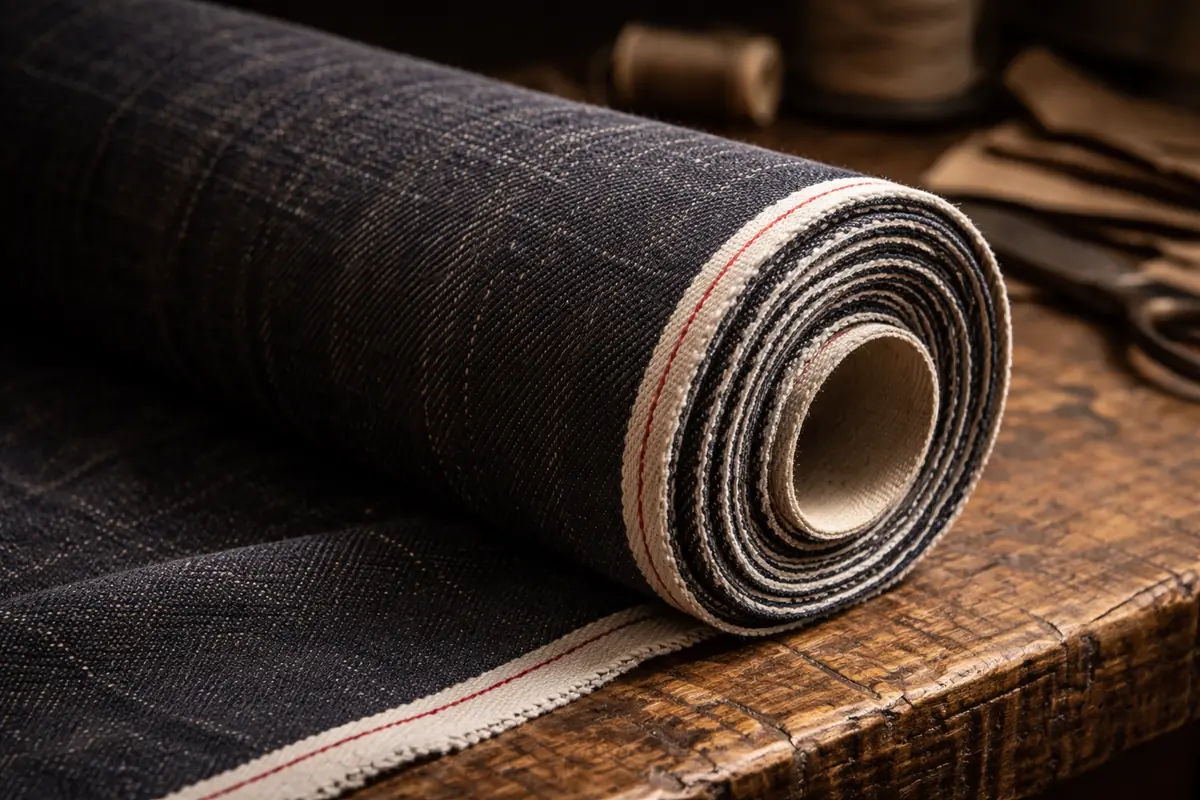
14oz Japanese Selvedge
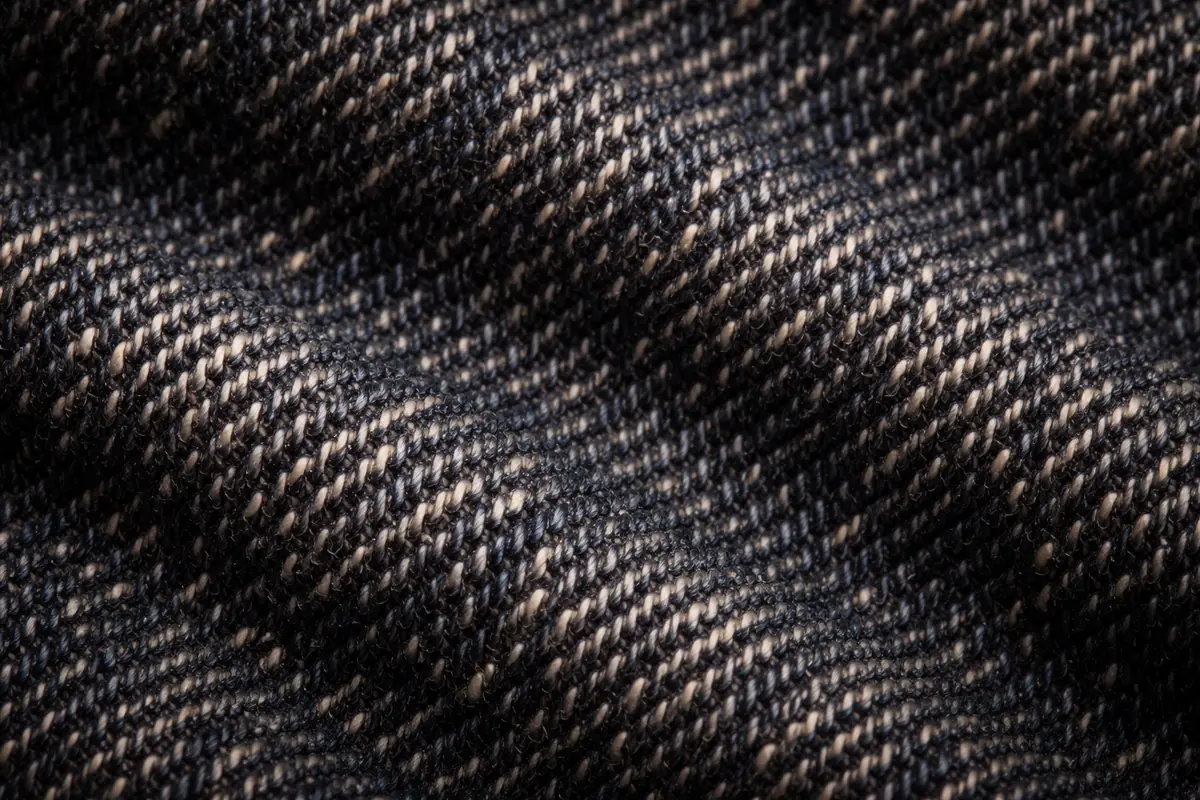
Sourced from Okayama's Kojima district, each bolt is shuttle-loomed to produce a dense, irregular weave that softens and fades uniquely with wear. No two pairs age the same way.
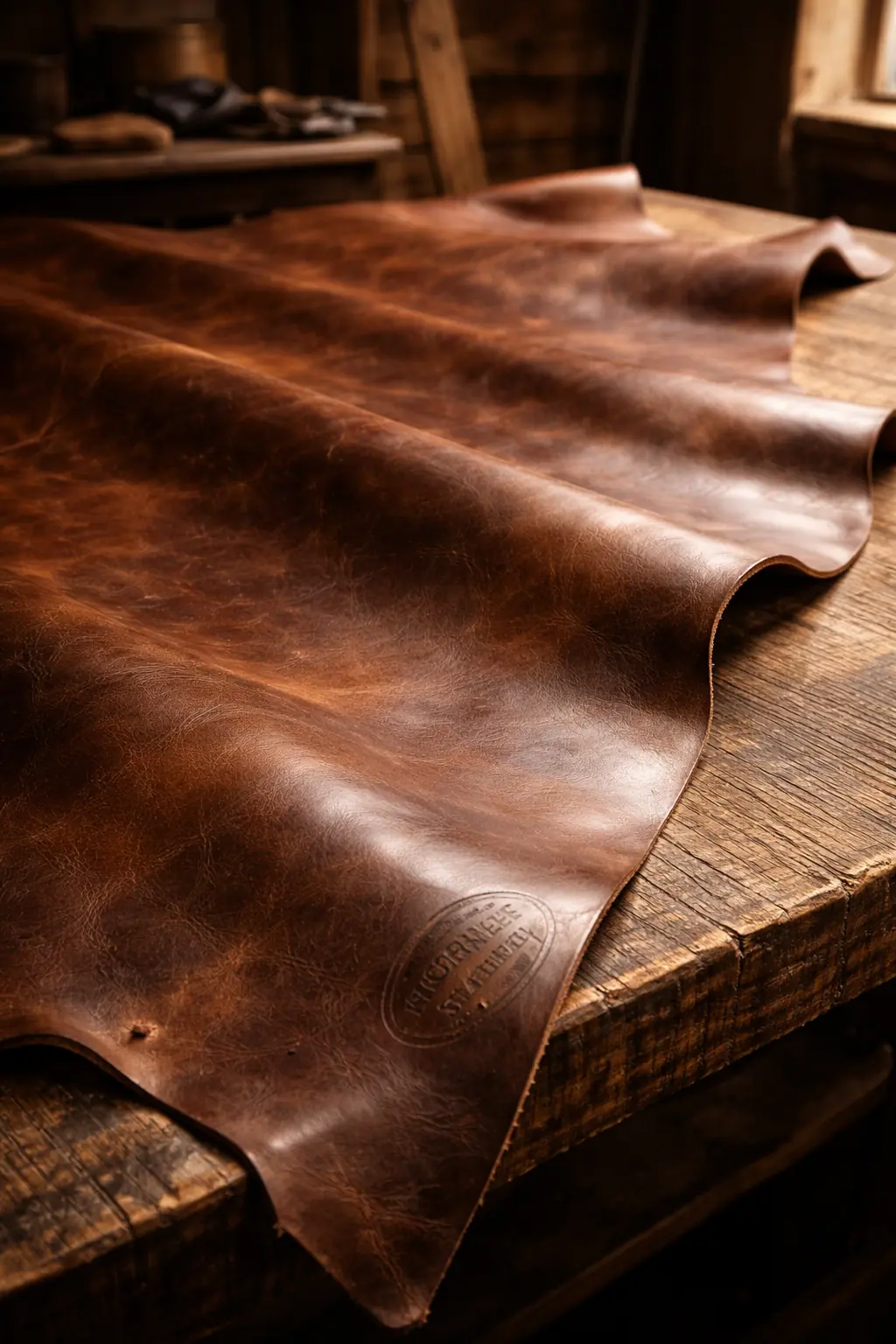
Horween Chromexcel
A combination-tanned leather from Chicago's last remaining tannery. The 28-step process produces a hide with a deep pull-up effect — scratches buff out by hand, developing a rich patina over years of use.
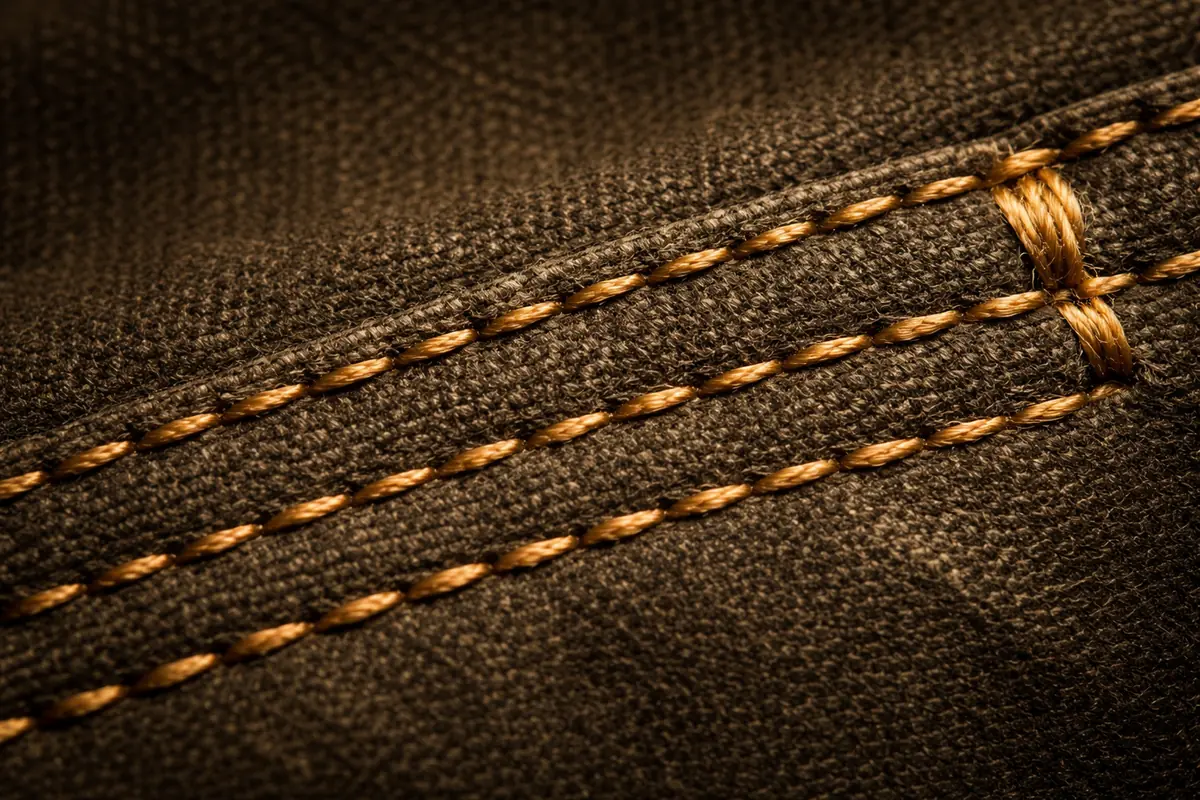
Triple-Stitch Construction
Every seam that bears weight is stitched three times with bonded nylon thread. Bar-tacks reinforce pocket openings and belt loops — the same technique used in pre-war military garments.
"You can tell a lot about a man by the wear on his jacket. If it's still in one piece after five years, chances are it came from Caldwell's." — Detroit Free Press, 1958
The Men Behind the Label
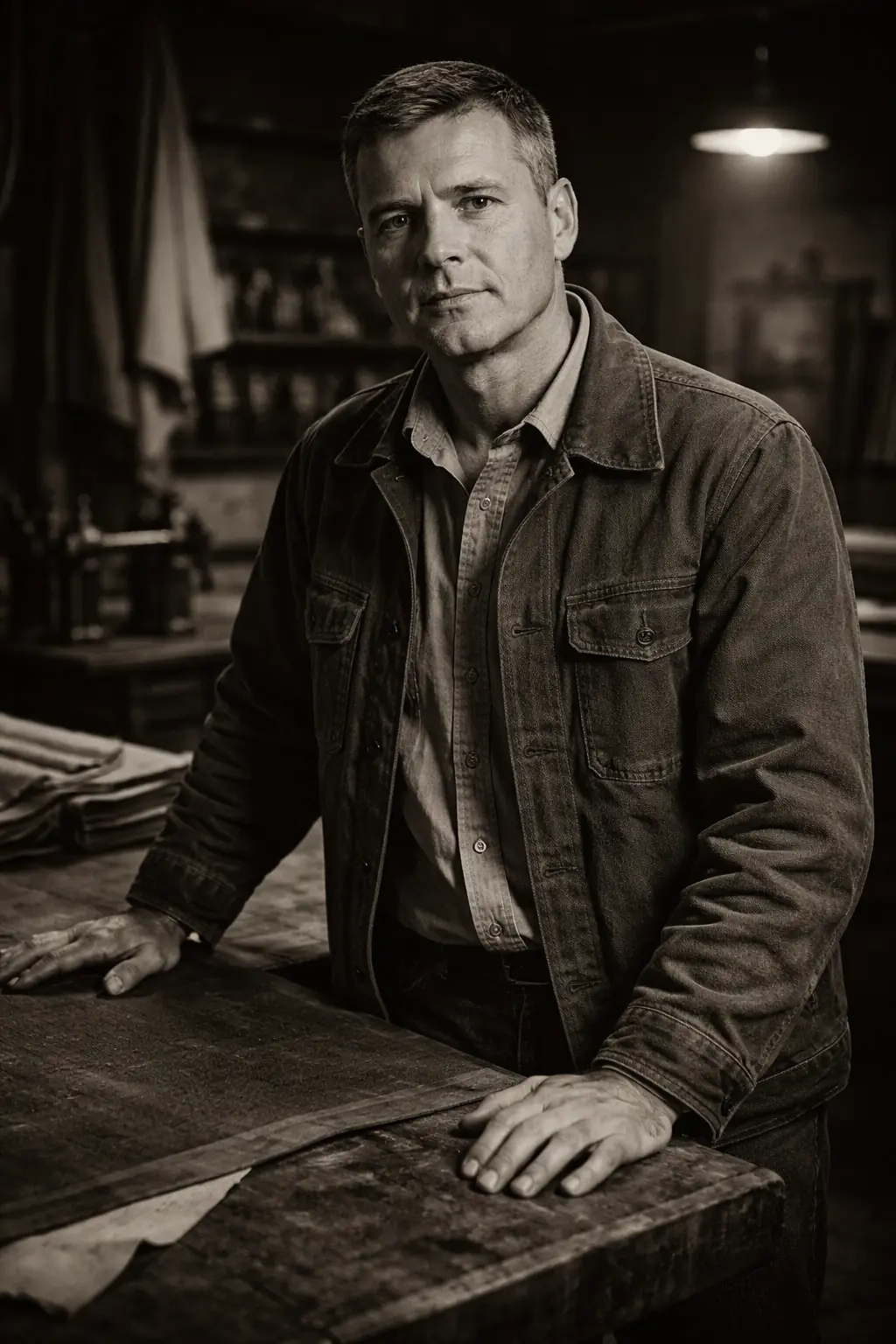
The Caldwell story is, at its core, a family story. James Sr. — "Big Jim" to the factory floor — was a man of few words and exacting standards. Colleagues recall him staying past midnight at the Michigan Avenue shop, unpicking seams that most customers would never have noticed, muttering that "good enough" was a phrase for men who didn't care about their work.
His eldest son, James Jr., brought business acumen to the operation. Where the father saw only the garment, the son saw the market. It was James Jr. who negotiated the Horween contract in 1972, who introduced the mail-order catalogue in 1978, and who — crucially — refused a buyout offer from a major conglomerate in 1985, insisting that the brand remain family-owned.
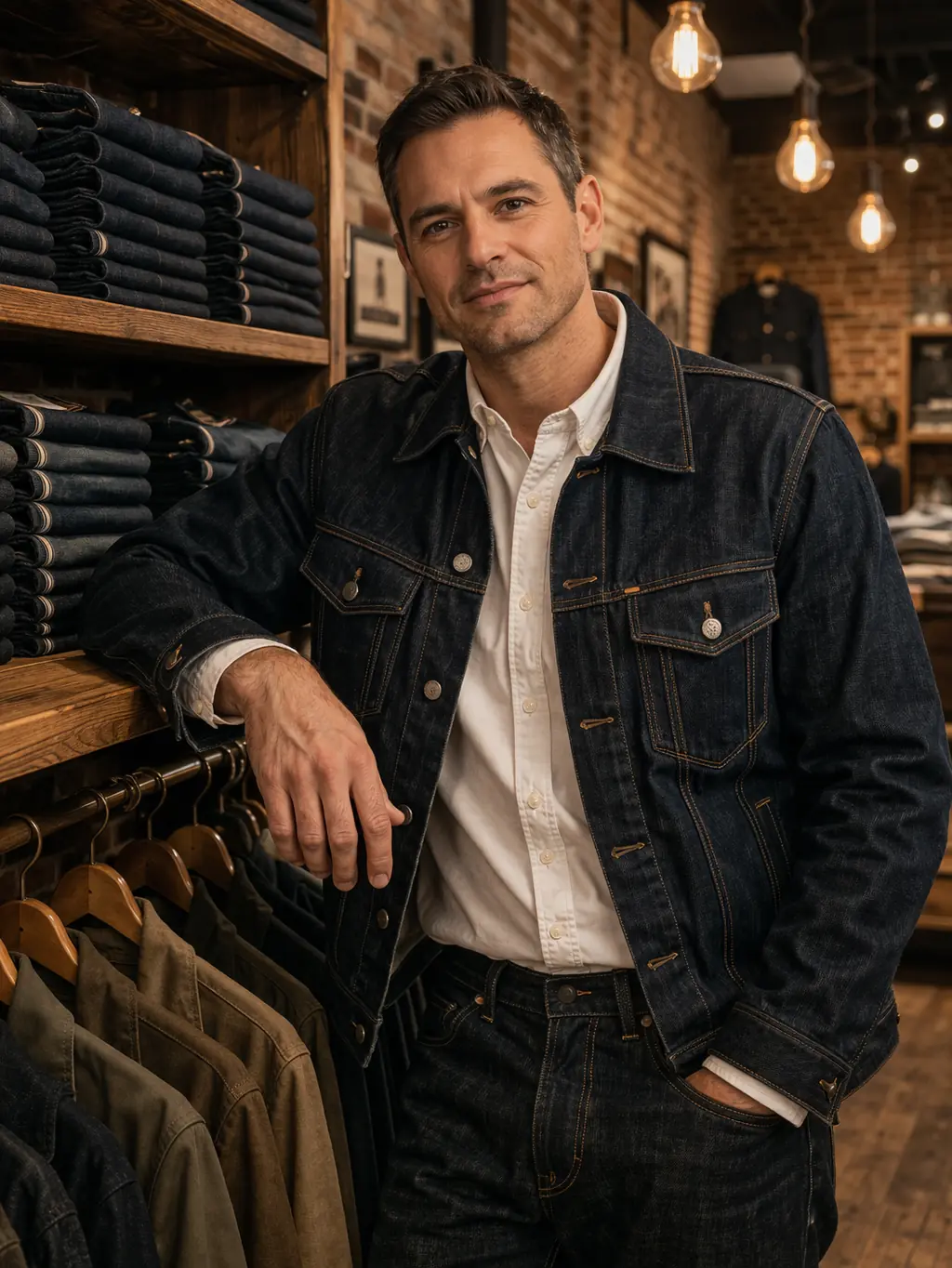
Today, third-generation Robert Caldwell steers the brand with a quiet confidence inherited from his grandfather. Under his watch, Caldwell & Sons has expanded beyond workwear into a broader lifestyle proposition — without ever losing the utilitarian DNA that defined its first jacket.
"My grandfather built things to last," Robert says, leaning against a cutting table in the Corktown flagship that sits two blocks from the original workshop site. "My father built a business to last. I'm trying to build a legacy that lasts." He pauses, then adds with a rare grin: "No pressure."
The Michigan Avenue workshop closed in 2004 — the building was demolished to make way for a parking lot, a fate that Big Jim would have found grimly poetic. But the cutting table he built survives, reinstalled as the centerpiece of the Corktown store, still bearing the burn marks from his hand-rolled cigarettes and the deep grooves worn by seventy-seven years of scissors and rotary cutters.
Continue the Story
Explore the collection that carries three generations of Detroit craftsmanship, or reach out to discuss press, wholesale, and collaborations.