Lookbook
Spring / Summer 2026 — "Assembly Line"
Photography: Marcus Cole | Styling: Nina Vasquez | Location: Packard Plant, Detroit
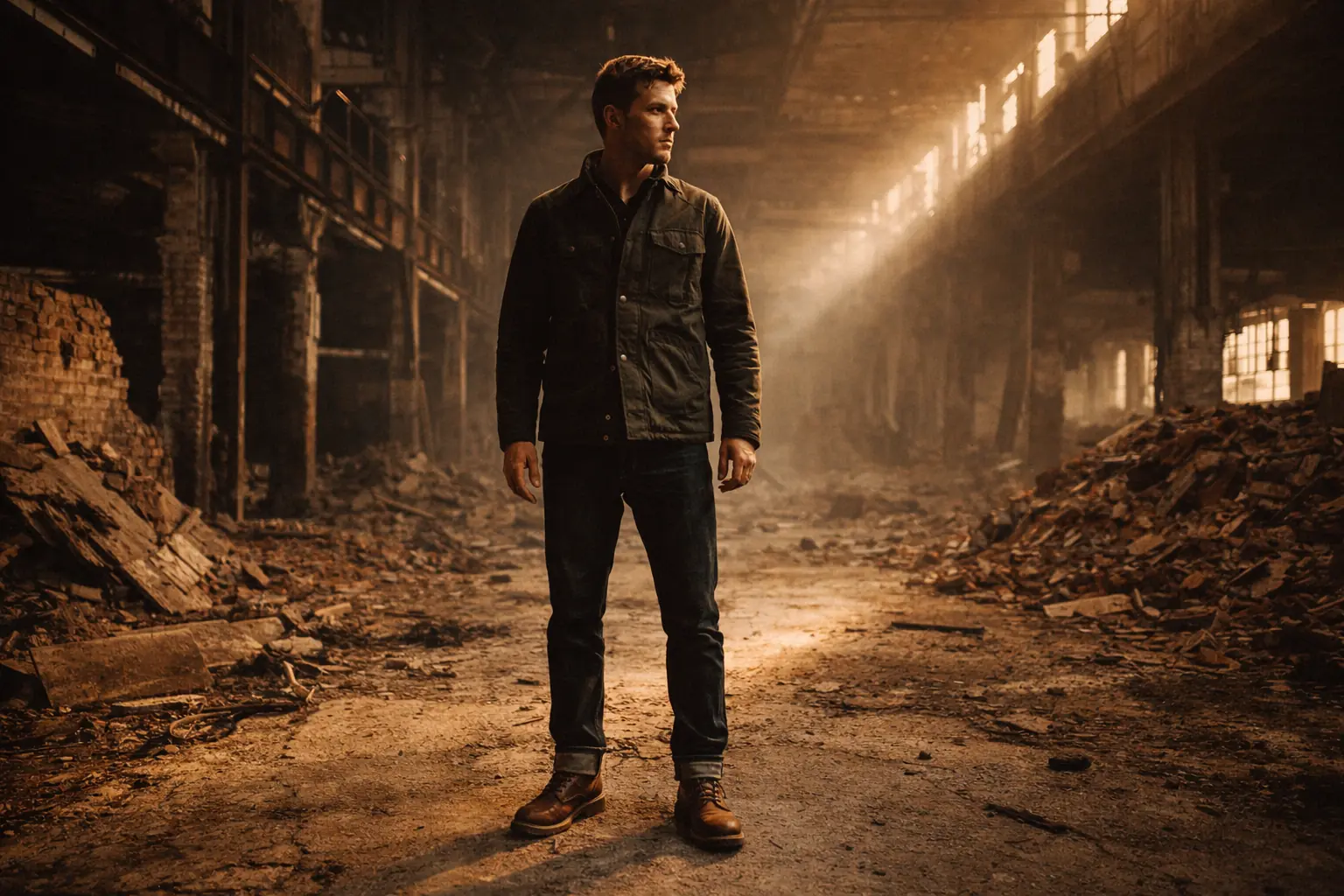
The Assembly Line
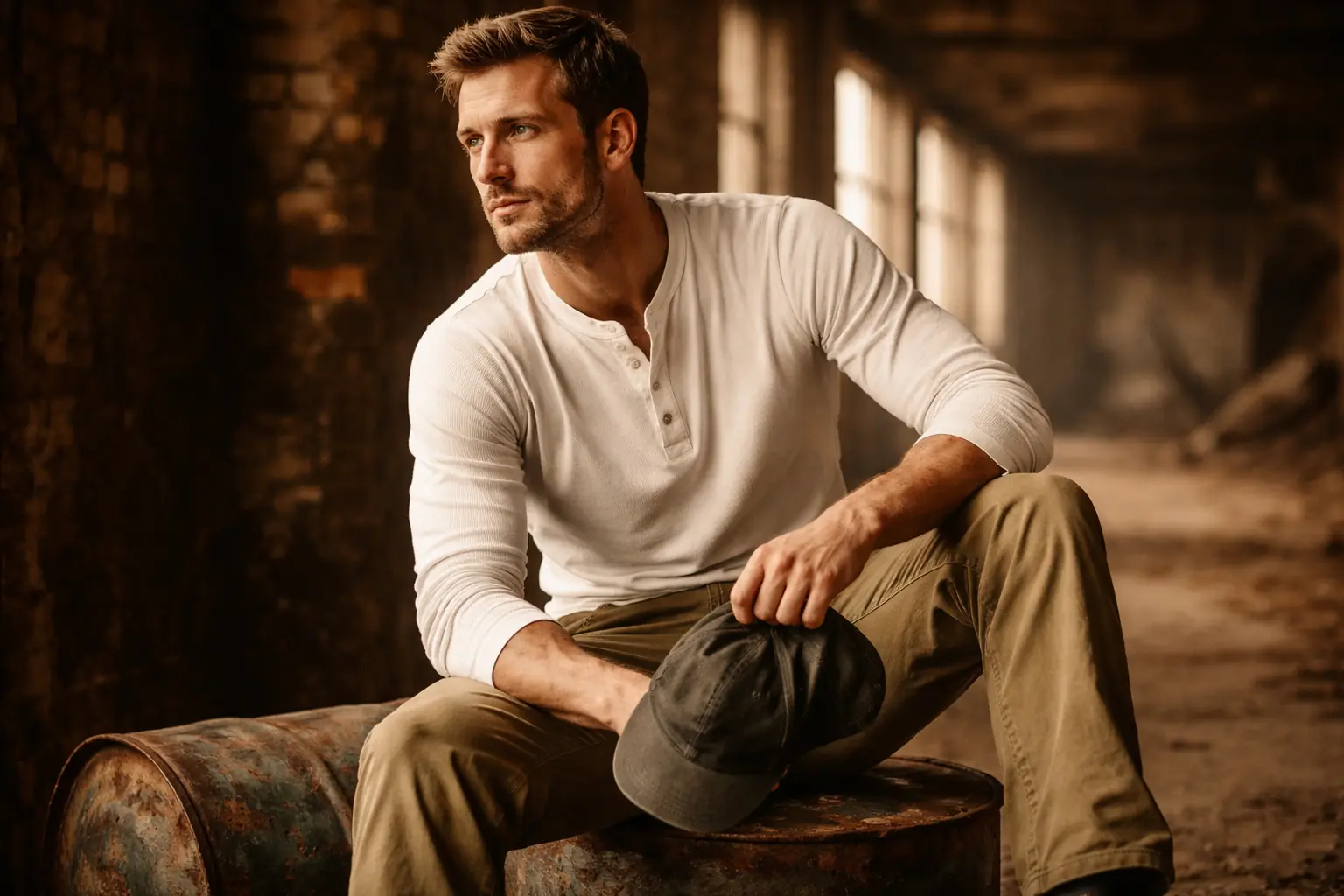
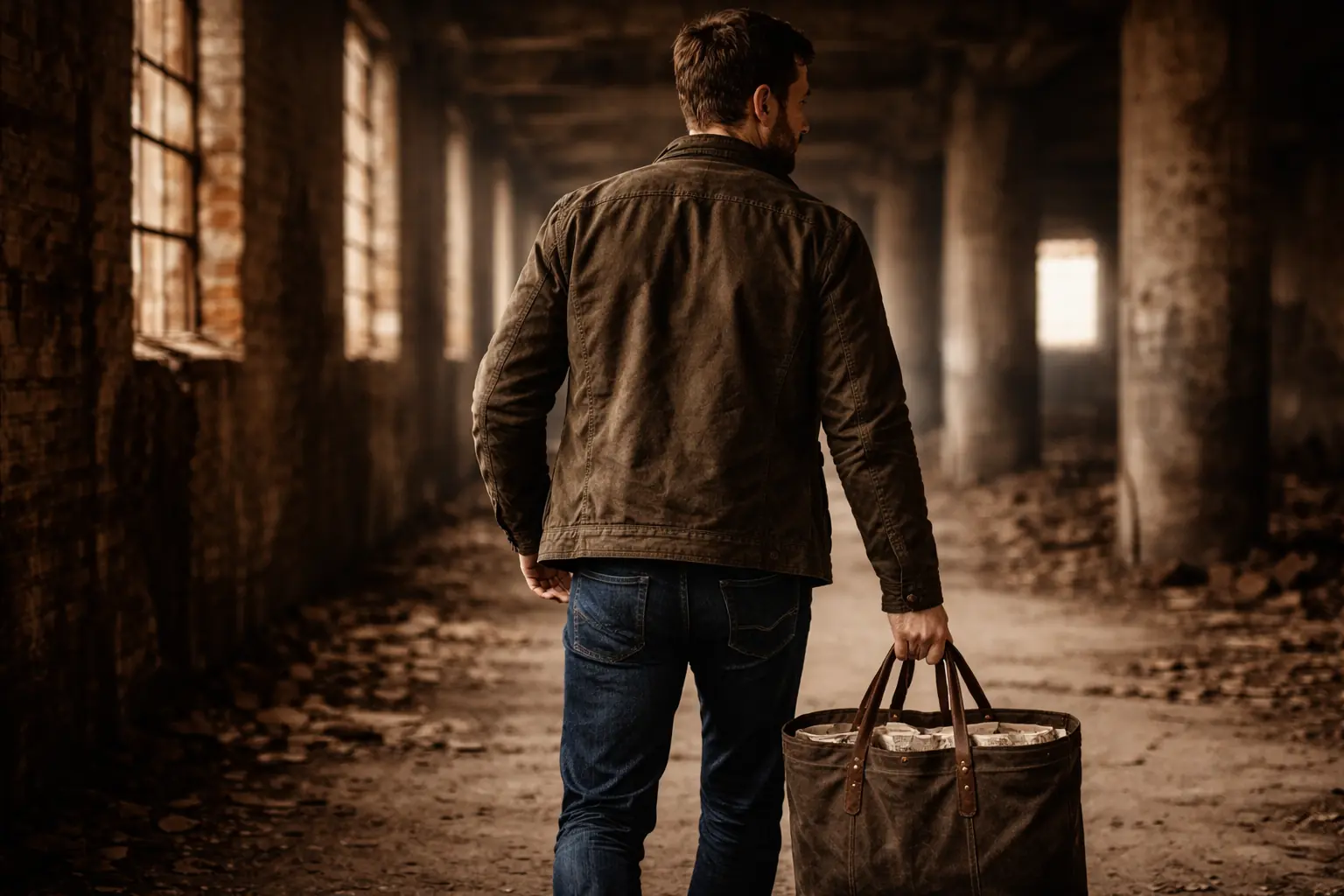
Against the rusted girders of Detroit's Packard Plant — a cathedral of American industry, abandoned but never forgotten — the Spring 2026 collection finds its natural backdrop. These are garments that belong in the company of steel and concrete, designed for hands that still know how to build.
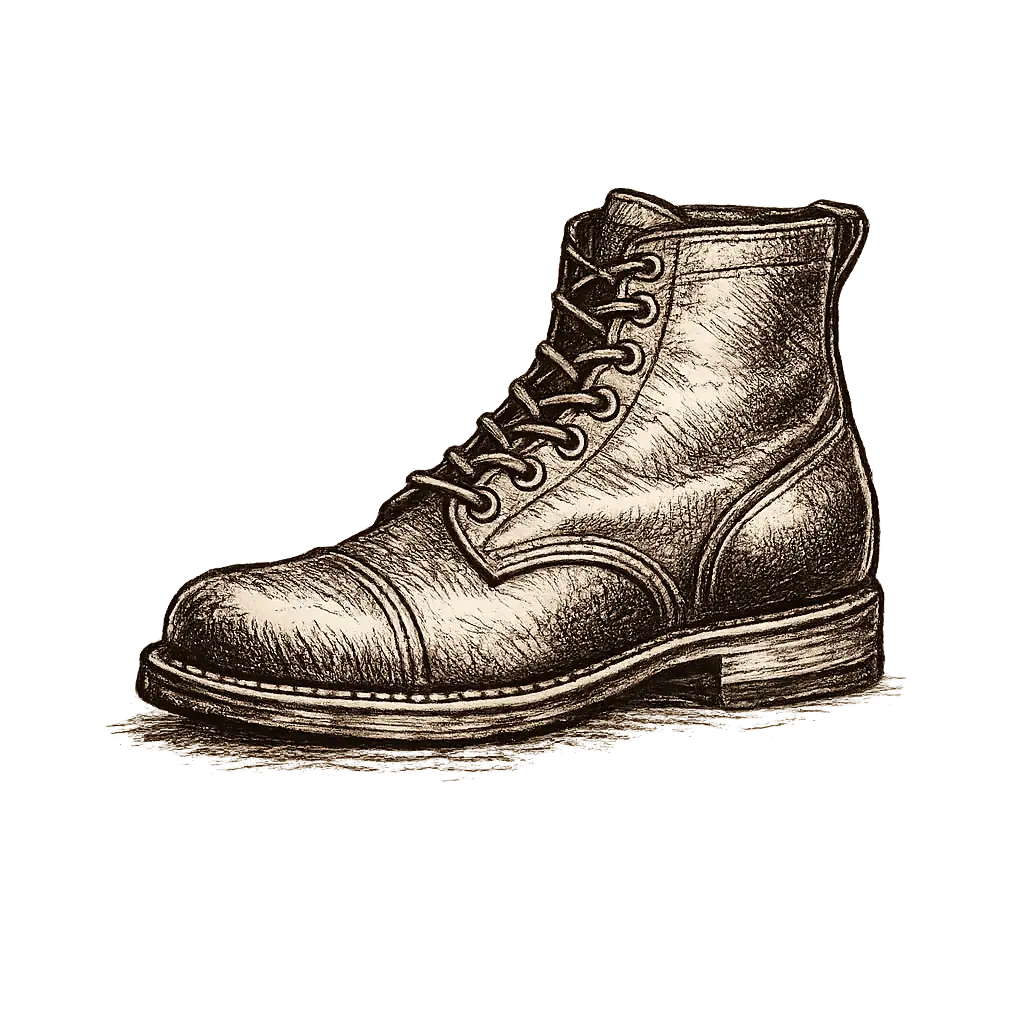
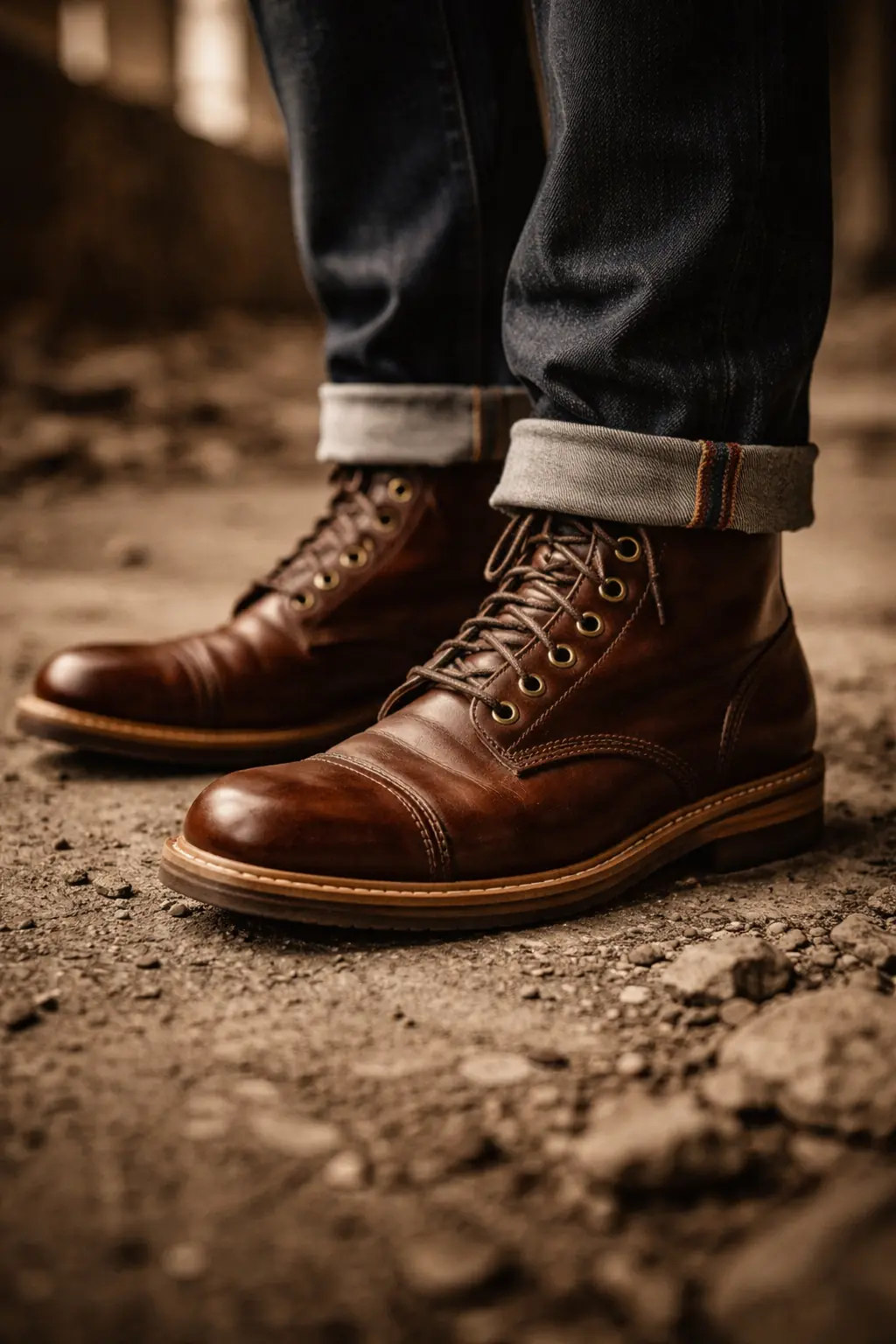
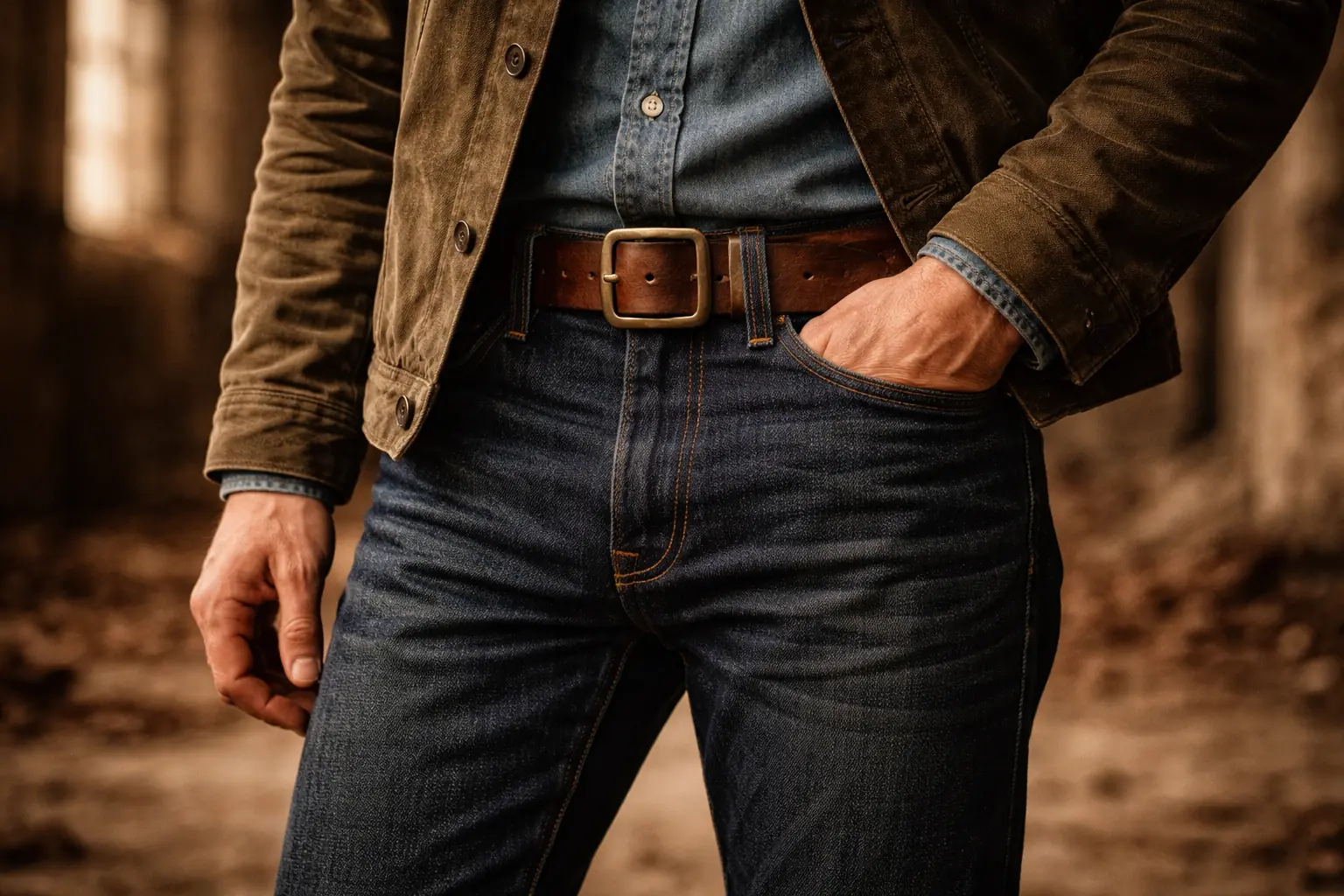
The twelve-piece capsule revisits archival patterns from the family's 1950s workshop, each one redrawn on the same cutting table that James Caldwell Sr. built seventy-nine years ago. Japanese selvedge denim replaces the surplus military canvas; Horween leather stands in for the cowhide offcuts that once served as hardware. The shapes, however, remain faithful — because the body of a worker hasn't changed.
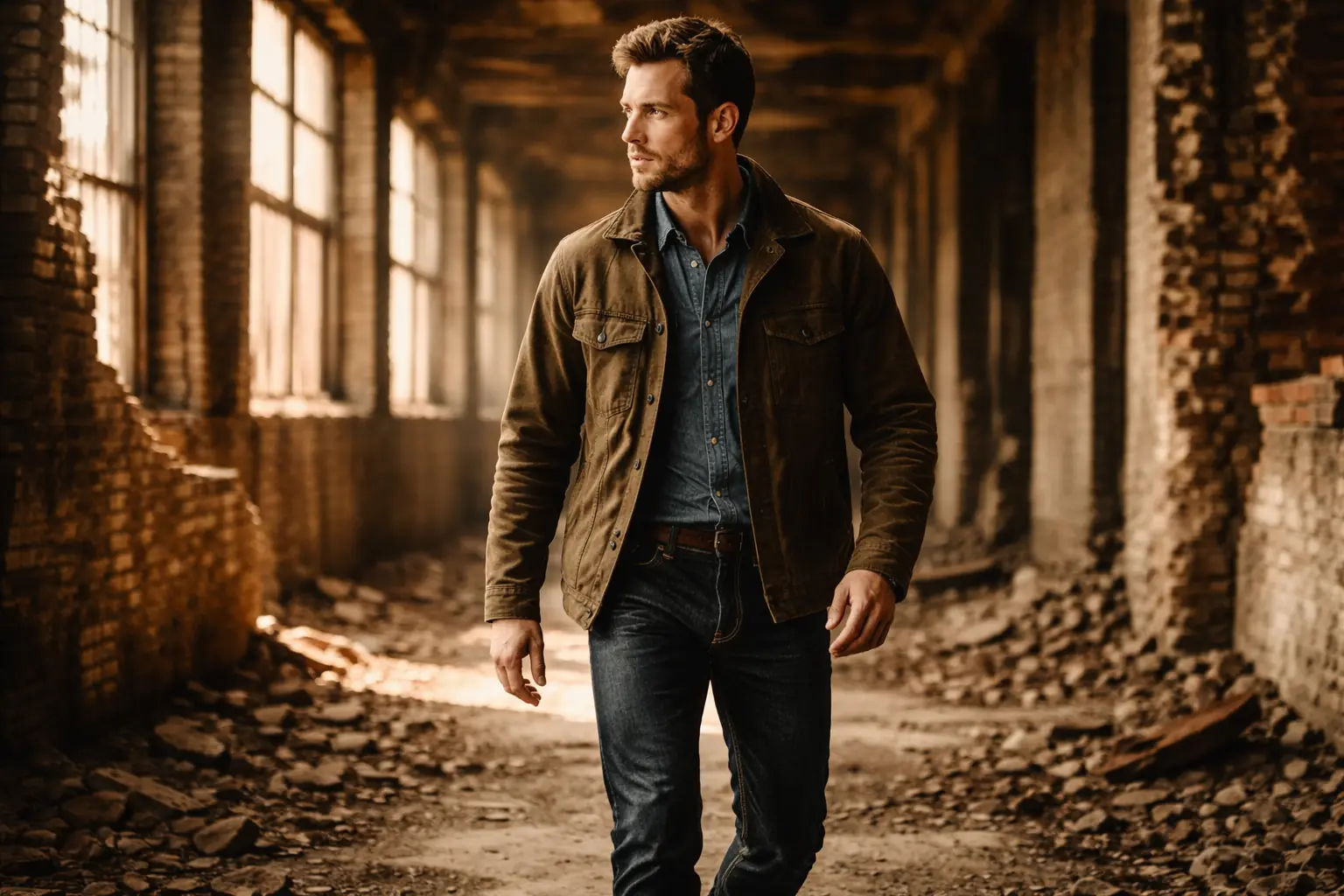
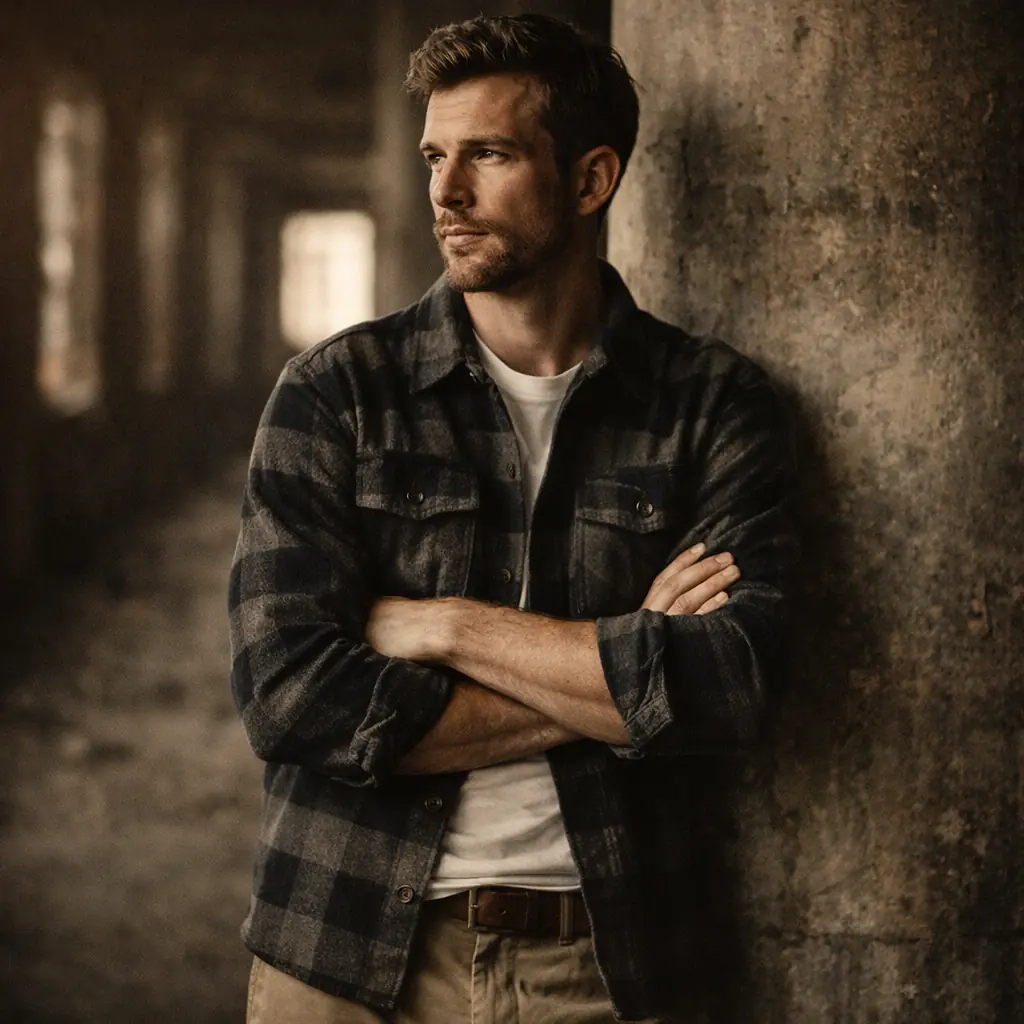
"These aren't costumes. They're clothes with a past — and a future." — Creative Director, J. Caldwell & Sons
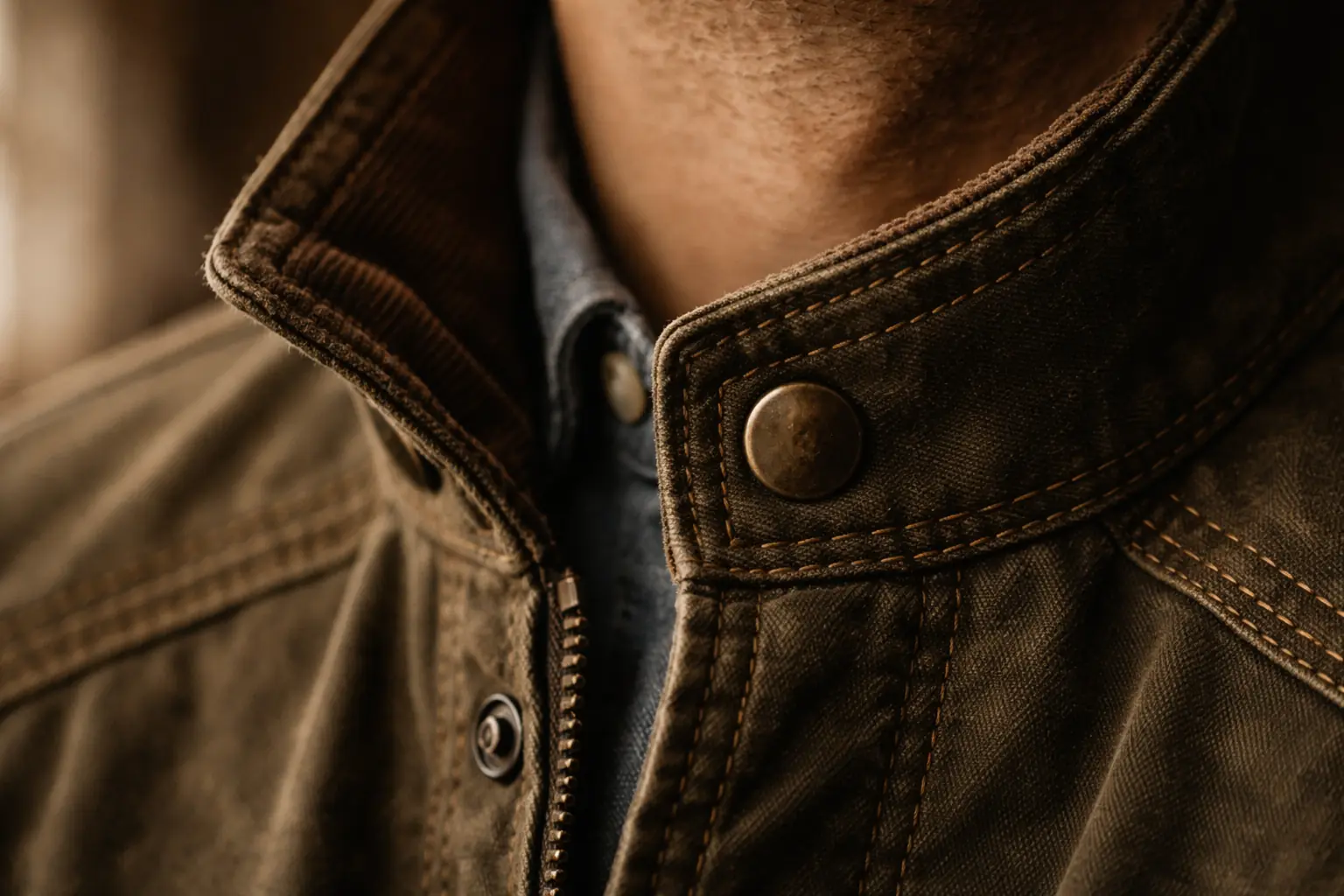
The Devil in the Details
Every seam tells a story. The Ironside's collar is built in three separate panels, each reinforced with bonded nylon thread and bar-tacked at the stress points. It's an invisible construction detail that means the jacket will keep its shape long after the fashion cycle has moved on — because at Caldwell's, the shoulder should outlast the season.
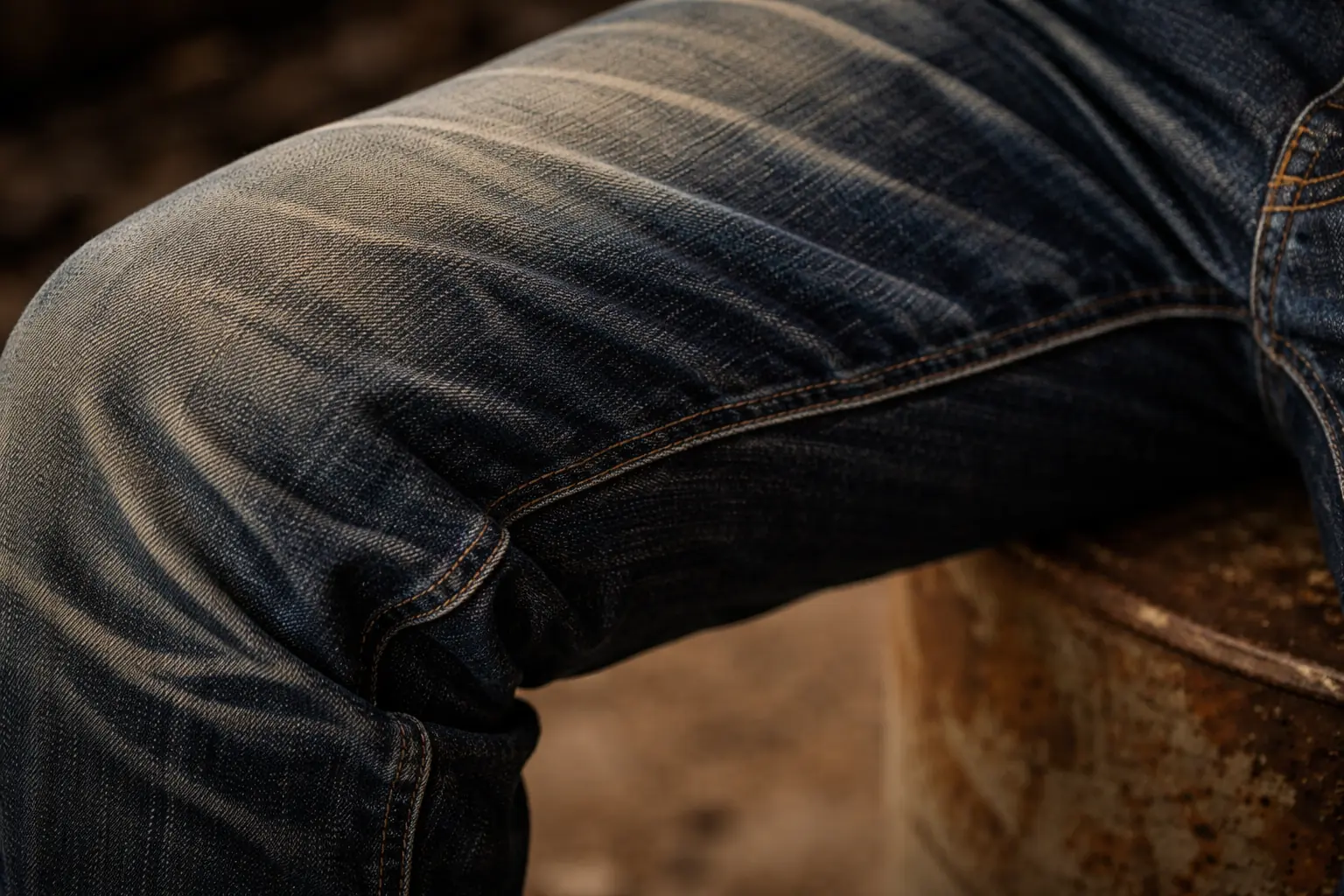
The Patina Is the Point
Raw denim is autobiography in cotton. Each crease, each fade, each worn-through spot is a record of how you sit, how you walk, what you carry in your pockets. The Rouge's 14oz selvedge starts as a blank canvas — stiff, dark, and full of potential. After six months, it's a garment that could only belong to you.
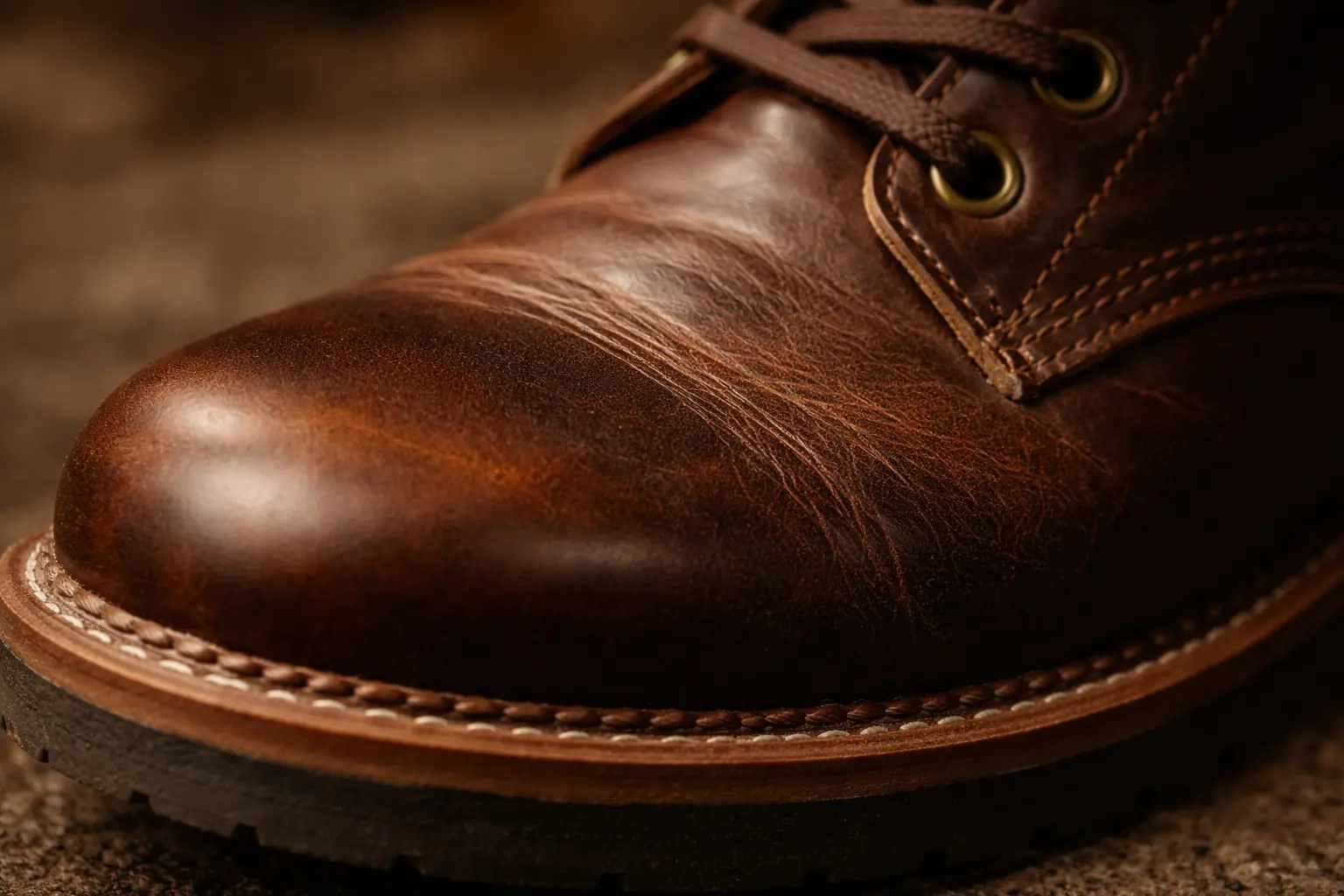
28 Steps to Leather
Horween's Chromexcel is one of the most complex leathers in the world. Twenty-eight separate processes — including combination tanning with chrome and vegetable agents, hand-stuffing with four different greases, and a final hot-stuffing that drives oils deep into the fibre — produce a hide that develops character instead of deterioration. Scratches buff out with your thumb. Patina builds instead of peels.
Behind the Lens
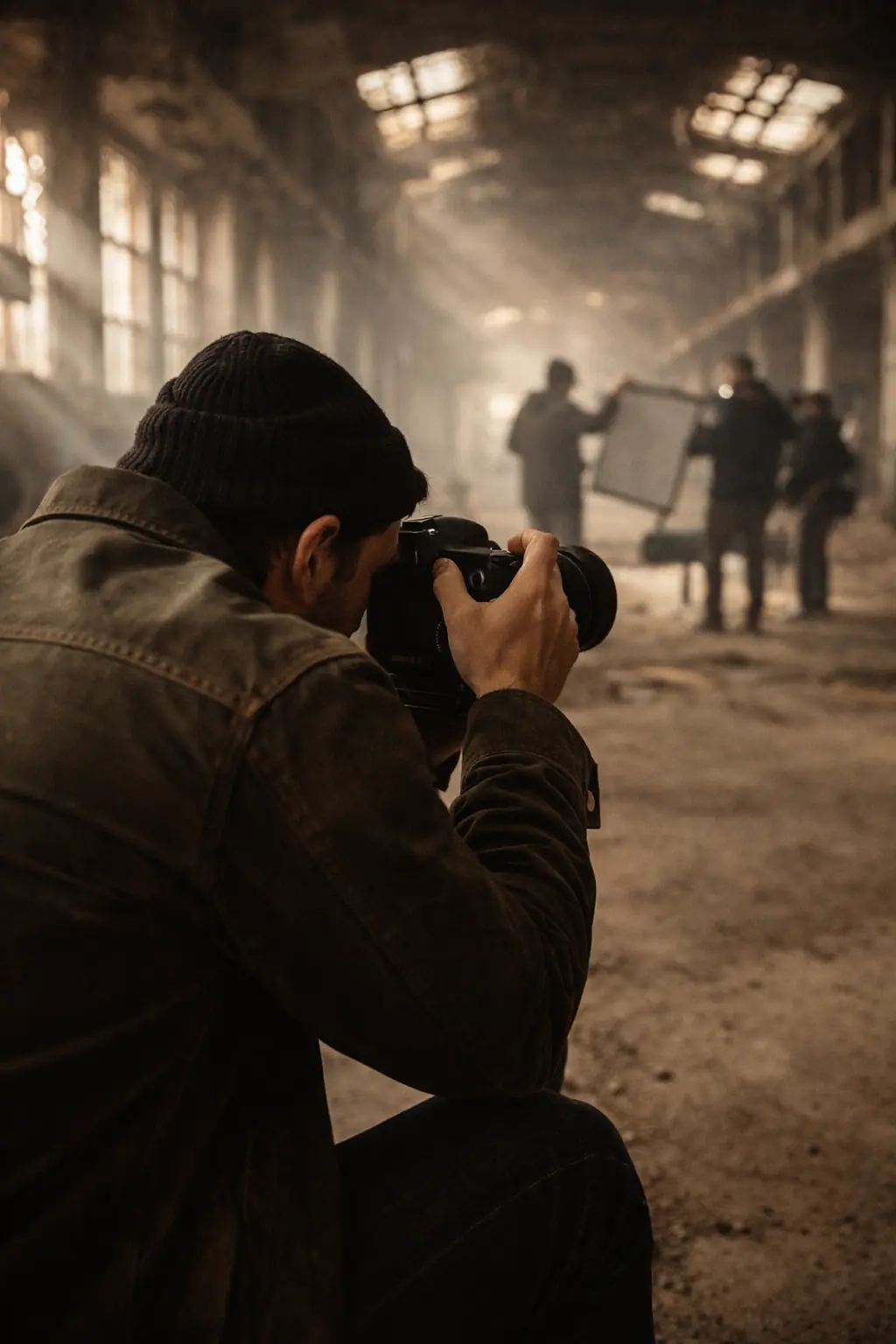
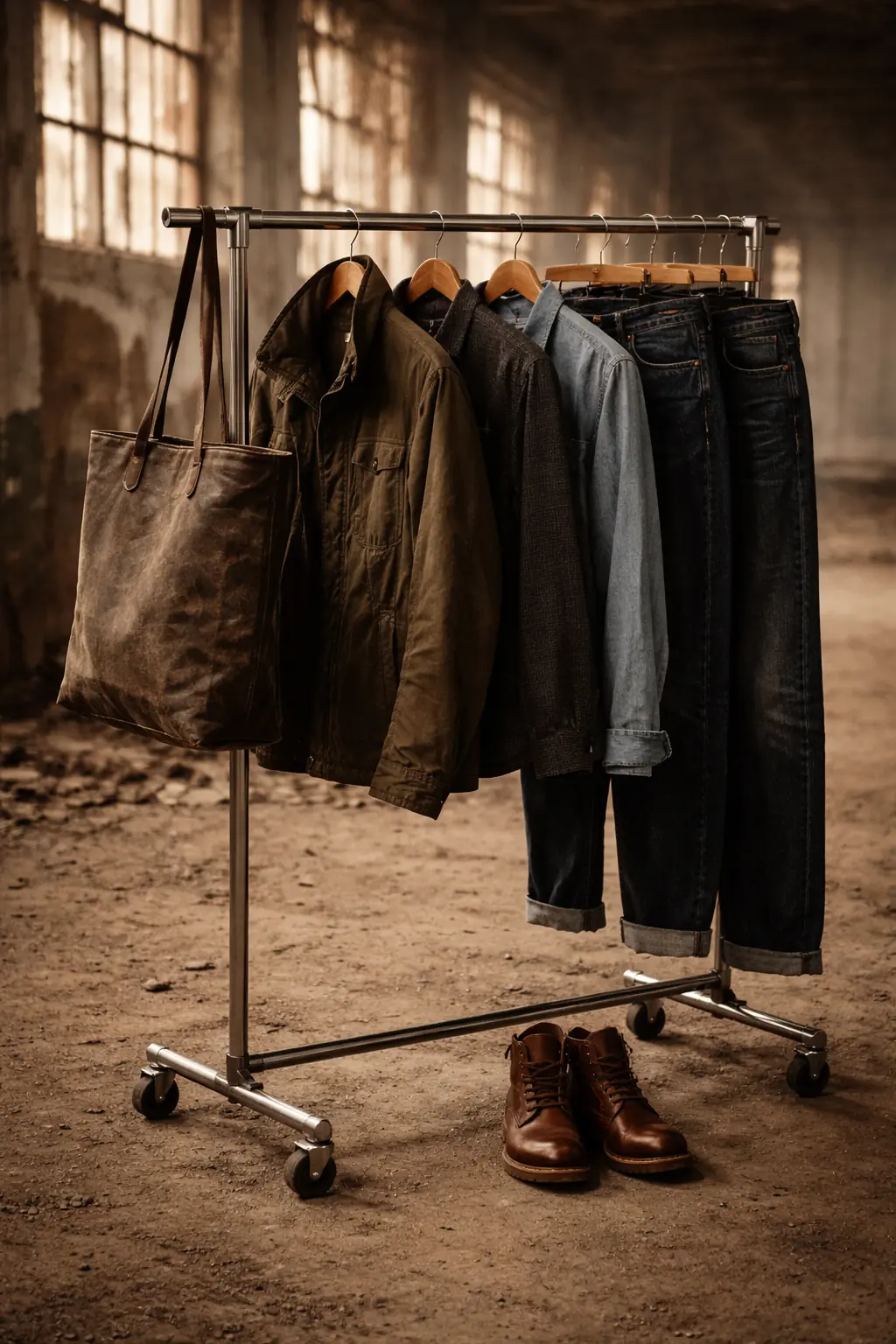
The Packard Motor Car Company plant opened in 1903 and at its peak employed forty thousand workers. It closed in 1958. Today, the 3.5-million-square-foot complex stands as the largest abandoned industrial site in the world — a concrete monument to the rise and fall of American manufacturing.
"We didn't choose the Packard Plant because it looks cool in photographs," says creative director Robert Caldwell. "We chose it because it's honest. It's a building that was built to work, just like our clothes. The rust isn't decoration — it's patina."
Photographer Marcus Cole, a Detroit native, spent three days navigating the plant's crumbling corridors with a crew of seven. Natural light — pouring through shattered windows and collapsed roof sections — provided most of the illumination. "We didn't bring studio lights," Cole explains. "The building does the lighting for you. You just have to know where to stand, and when."
Stylist Nina Vasquez curated each look to blur the line between workwear and contemporary fashion. "The challenge with Caldwell pieces is that they're beautiful on a hanger," she says. "My job is to make sure they're even more beautiful when they're lived in."
Explore the Collection
See the complete Spring / Summer 2026 lineup — materials, specifications, and the stories behind each piece.
View Collection →